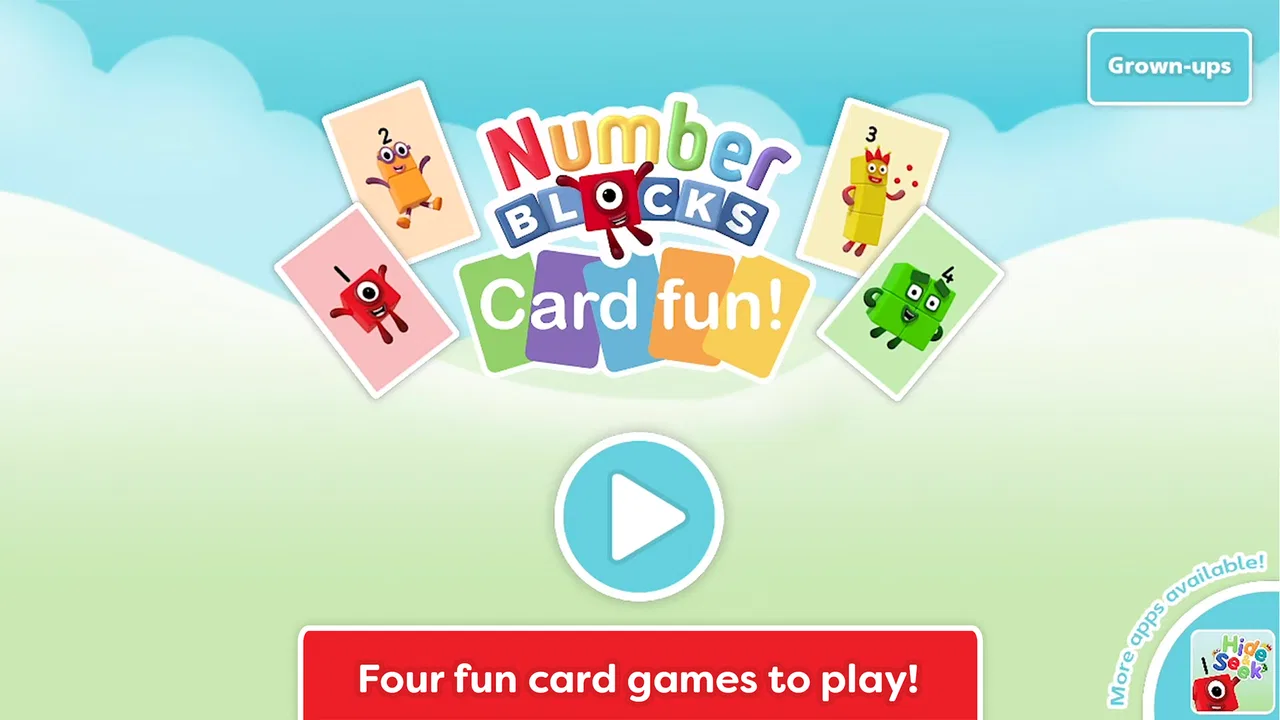
Numberblocks: Card Fun!
- 2.9
- Rating
- 10.00K
- Installs
- $3.49
- Price
 Analysis by App-foxy
Numberblocks: Card Fun! is the kind of educational game I would look at when a child enjoys the Numberblocks characters but needs a more hands-on way to practise recognising and working with numbers. Blue Zoo keeps the idea focused: this is not a broad maths course or a long adventure game, but a card-based experience built around number literacy. That narrow purpose is both its appeal and its main limitation.
I tested it with the mindset of a parent choosing a short learning activity rather than another game to occupy a child for hours. The experience makes the most sense when an adult is nearby at the beginning, helping the child understand what the cards are asking them to do and turning a few rounds into a conversation about numbers. Used that way, it can be a pleasant bridge between watching Numberblocks and doing simple number practice.
The game is listed at $3.49, carries an Everyone age rating, and runs on Android from version 8.0 onward. Its current version is 1.4.2. Those details make it relatively easy to place in a family’s setup, but the purchase still deserves some thought because the game’s value depends heavily on whether your child enjoys repeating a focused activity instead of expecting a large collection of modes.
You May Also Like

 Pandora - Music & Podcasts
Pandora’s Music Is Easy to Start, but Harder to Recover
Pandora’s strength is its low-effort path from a seed to a station. Its weak spot is how much confidence it asks you to place in connection, setup, and quiet recovery.

 AccuWeather: Weather Radar
AccuWeather Review: A Quick, Clear Forecast for Everyday Decisions
For everyday plans, the best forecast is the one you can understand quickly. AccuWeather makes rain timing, radar, and local conditions easy to act on, with a few trade-offs.

 Hill Climb Racing
Why Hill Climb Racing Still Turns Crashes Into One More Run
A tiny car, a bumpy hill and one more upgrade: Hill Climb Racing keeps resurfacing because its simple chaos makes every near-miss feel personal.

 AliExpress - Shopping App
AliExpress Makes Global Shopping Feel Personal, but Shoppers Bear the Risk
AliExpress turns a global marketplace into a pocket-sized discovery engine. Its reach is useful, its shopping loop compelling, and its trade-offs easy to miss.

 Lords Mobile: Kingdom Wars
Lords Mobile Is a Kingdom-Building Routine, Not a Quick Match
A case-by-case verdict on the building, battles, device demands, and social commitments that make Lords Mobile rewarding for some players and exhausting for others.

 PDF Scanner app - TapScanner
TapScanner Makes Paperwork Easier to Capture, Check, and Share
TapScanner makes scanning with a phone feel less like a rescue operation and more like a dependable step in getting work done. Its capture tools are useful, though not flawless.
More From Our News Desk
View All News


Getting past the first points of friction
I’d start by treating the first few cards as a chance to learn the game’s rhythm together, rather than expecting a child to understand every prompt immediately. I’d keep the directions simple and let them describe what they notice before choosing; that gives me a better sense of whether the hurdle is the instruction, the number, or just the pace. From there, it’s easier to spot what to adjust next.
Why the opening experience can feel less obvious than expected
The first place I would expect a young player to get stuck is not the number work itself, but understanding the rhythm of a card activity. Children often tap quickly, choose an answer before looking at the whole card, or wait for the game to behave like a cartoon episode. A parent may see this as a problem with the app, when it is really a difference between entertainment habits and learning-game habits.
I found it useful to introduce the activity with one simple instruction: look at the card first, say what you notice, and only then make a choice. That small pause changes the experience. Instead of treating each screen as a guessing challenge, the child begins to connect the visual number information with spoken number names. For early learners, that verbal step is important because number recognition is not always the same as understanding quantity.
The game’s strongest audience is therefore a child who already knows the Numberblocks world and is beginning to build confidence with numbers. Familiar characters can make practice feel less formal. However, recognition of the characters alone does not guarantee that a child will understand the task. If the child is still uncomfortable identifying basic numerals, I would sit with them rather than handing over the device and expecting independent progress.
Small setup checks that prevent avoidable disappointment
Before deciding that the game is unsuitable, I would check the basics. The device needs to meet the Android requirement, the installation needs to finish properly, and the child should have enough time to explore without being rushed. A young player who is interrupted after every card may appear uninterested even when the activity would work well in a calmer setting.
I would also open the game once as an adult before giving it to a child. This is not about changing complicated settings; it is about learning how the card interaction feels, noticing where instructions appear, and deciding whether the child will need spoken guidance. That short preview makes the first session smoother and avoids turning the child’s first attempt into a troubleshooting lesson.
The price is another practical consideration. At $3.49, it is a paid educational game rather than a free trial that can be casually installed and forgotten. I see that as a reason to match it carefully to the child’s interests. If Numberblocks is already part of the child’s play, the focused format may justify the cost. If the child prefers open-ended drawing, physical toys, or fast action games, a purchase may not hold attention for long.
Because the title is aimed at Everyone, it is positioned for a broad family audience. That does not mean every child will find the same level comfortable. A preschooler may need an adult to read or explain an instruction, while an older child who already handles basic number work may find the material too easy. The age label helps with suitability, but the child’s current ability matters more than the label alone.
How I would introduce a first session
I would begin with a short, shared session rather than presenting it as homework. Sit beside the child, let them handle the device, and ask questions such as “How many do you see?” or “What made you choose that card?” The goal is not to supply every answer. It is to find out whether the child is recognising the number, counting carefully, or simply copying a familiar visual pattern.
That distinction gives the game more educational value. If a child answers correctly but cannot explain why, I would slow down and use the card as a prompt for counting. If the child explains the answer comfortably, I would avoid over-teaching and let the game remain enjoyable. The app works best as a conversation starter, not as a replacement for every other kind of number play.
A useful routine is to stop while the child is still interested. Short sessions can make the cards feel like a repeatable activity rather than a test that must be completed. I would not measure success by how long the child stays on the device. I would look for signs that they begin to recognise numbers more quickly, talk about quantities, or ask to play again without being pushed.
Recovering when the activity does not go smoothly
When a session goes off track, I’d separate a brief interruption from a pattern that keeps blocking play. I’d reopen the activity and try a familiar card, then note the exact action if the same issue returns instead of changing several things at once. That calm reset also helps me decide whether the child needs a different prompt, a short break, or a different kind of number practice.
When a child taps through the learning moment
Fast tapping is one of the most realistic problems with any card-based children’s game. If the child keeps selecting answers immediately, I would move the focus away from correctness. Ask them to point to the number before tapping, or invite them to say the answer aloud first. This turns the device into a prompt for deliberate thinking without adding a complicated rule.
I would also avoid correcting every mistake in a frustrated tone. The useful question is what caused the error. Did the child misread the numeral, lose count, misunderstand the instruction, or simply rush? Each cause needs a different response. Recounting helps with quantity, while saying the number aloud helps connect the written symbol with language.
This is one of the less obvious strengths of the format: the cards can support an adult-led learning routine even when the child is not ready to use the game alone. The app does not have to carry the entire teaching responsibility. A parent can use one card as a starting point for physical counting with blocks, snacks, or toys, then return to the screen and see whether the connection has become clearer.
What to do after an interruption or a failed session
If the game closes, the device changes hands, or the child loses interest, I would restart calmly rather than trying to reconstruct a perfect learning sequence. The safest general recovery is to reopen the game, check whether the activity returns to a usable state, and begin again with a familiar card. There is no benefit in making a young child feel responsible for a technical interruption.
When an app behaves unexpectedly, I would first close and reopen it, confirm that the device is responding normally, and make sure the installation completed correctly. If the issue continues, restarting the device is a reasonable next step. I would avoid deleting the application immediately, especially if I did not know how the device handles local progress or purchases. A reinstall can create more uncertainty than it solves.
It is also worth separating a one-time glitch from a repeatable problem. If the same card or action causes trouble repeatedly, note exactly what happened: where it occurred, what was tapped, and whether the rest of the game still responded. That description is much more useful when seeking help than saying only that the game “does not work.”
When the app is not the real cause
Some apparent failures are really mismatches between the child and the activity. A child who cannot yet recognise the numerals may need physical counting practice first. A child who already understands the material may be bored rather than confused. In both cases, changing the way the game is used may help, but it cannot turn a narrowly focused number activity into a complete maths curriculum.
Device conditions can matter too. A crowded screen, low battery, background interruptions, or a child using the device while tired can make simple interactions feel difficult. I would test the game under ordinary, comfortable conditions before judging it. If other apps also respond slowly or close unexpectedly, the problem is probably broader than this particular title.
Another important distinction is between learning progress and game progress. A child may not appear to advance quickly because they are practising the same number idea repeatedly. That repetition can be useful, but only if the child remains engaged. If every session produces frustration, I would switch to an offline activity and return later rather than treating persistence as the only solution.
How it compares with familiar alternatives
Compared with a general children’s video app, Numberblocks: Card Fun! asks the child to do more than watch. The card format gives the number theme a purpose, which is useful when a parent wants screen time to include active recognition and decision-making. On the other hand, a video is easier for a tired child to follow independently, so families looking for passive entertainment may prefer that option.
Compared with physical number cards, the game is more convenient when the phone or tablet is already available and the child is motivated by Numberblocks. Physical cards are cheaper to reuse once owned, easier to combine with toys, and better for movement-based activities. They also require an adult to create the questions and check the answers. The digital version offers a more guided experience, but it should not replace physical play entirely.
Compared with a broad maths-learning app, this title is more specialised. That can be an advantage for a child who needs a gentle, familiar entry point into number literacy. It is less suitable for a family seeking a structured path across counting, shapes, measurement, problem solving, and later arithmetic. I would choose a broader app when progress tracking, varied lessons, or a wider curriculum is the main priority.
The rating gives a useful signal about expectations: the game has a 2.9 average from 92 ratings, with 5 written reviews, and it has passed 10K+ installs. I would read that as a reason to keep expectations measured rather than as a simple verdict. The audience is likely to be quite specific, and a child who loves the characters may respond very differently from a child who has no interest in them.
Who will get the most from it?
I think it suits families who want a compact number-literacy activity connected to a child’s existing interest in Numberblocks. It is especially promising for a younger learner who benefits from visual prompts, repetition, and an adult asking follow-up questions. It can also work as a transition activity: a few cards before getting dressed, after a snack, or during a quiet moment when a parent wants something more purposeful than random tapping.
A realistic everyday use would be a child waiting while a parent prepares dinner. Instead of expecting the child to complete a lesson alone, the parent could sit nearby for the first few cards, ask the child to name what they see, and then let them continue while the adult cooks. Later, the parent could revisit one number with household objects. That workflow keeps the screen activity short and turns it into a cue for real-world practice.
I would skip it if the child strongly dislikes card questions, becomes upset by repeated mistakes, or needs a much wider range of educational topics. I would also look elsewhere if independent use is essential from the first minute. The game may be simple, but simple does not always mean self-explanatory for a very young player.
My practical verdict
Numberblocks: Card Fun! is best treated as a focused number-practice tool, not a complete educational system. I like the way its familiar theme can lower the barrier to practising numerals, and I think the card approach gives parents something concrete to discuss with a child. The most valuable results are likely to come from short sessions where the adult encourages the child to explain an answer rather than merely tap it.
My reservations are equally practical. The experience may feel narrow for children who want variety, and its educational benefit depends on the child’s starting level and willingness to engage. The paid price makes that fit worth considering before installing. I would not buy it simply because a child has seen Numberblocks; I would choose it when that interest is combined with a clear need for gentle number-literacy practice.
Blue Zoo has made a specialised game with a clear place in a family’s routine. If you use it as one small part of learning—alongside counting objects, talking about quantities, and playing with physical numbers—it can be a useful and friendly option. If you expect a full maths course or completely hands-off entertainment, another type of app will probably serve you better.
FAQs for Numberblocks: Card Fun!
01What is Numberblocks: Card Fun!?
Numberblocks: Card Fun! is an educational card game based on the popular Numberblocks characters. It is designed to help young children practise early maths skills through simple, colourful activities. Depending on the mode selected, children can work with number recognition, counting, matching, ordering, and basic number relationships in a playful format rather than through traditional worksheets.
02Is Numberblocks: Card Fun! suitable for my child’s age?
The game is primarily aimed at preschool and early-primary children who are beginning to recognise numbers and develop basic counting skills. Its suitability depends on your child’s current ability, since younger players may need help understanding the rules or reading instructions. Parents should check the store’s recommended age range and try the easiest activities first before moving to more challenging card exercises.
03Does Numberblocks: Card Fun! require an internet connection?
The core activities may be playable without a constant internet connection once the application has been installed, which is useful for travel or limiting online access. However, an internet connection can still be required for downloading the app, installing updates, restoring purchases, or accessing certain additional content. Availability of offline features may vary by device and app version.
04Is Numberblocks: Card Fun! free to download, and does it include purchases?
Numberblocks: Card Fun! may be offered as a free download or as a paid educational title, depending on the platform and region. Some versions can include optional purchases, extra content, or features that are not available in the basic edition. Before downloading, parents should review the current store listing carefully and check the device’s purchase restrictions to prevent accidental transactions.
05Is Numberblocks: Card Fun! safe and useful for children?
The app is designed as a child-friendly learning experience, using familiar Numberblocks characters and short, accessible activities instead of complicated menus. It can be useful for reinforcing number recognition and early maths practice, but it should complement—not replace—play, conversation, and adult guidance. Parents should review privacy details, advertising information, permissions, and any parental controls shown on the relevant app store page.
Pros
- Bright
- friendly artwork makes the cards appealing to younger children.
- Simple card activities are easy for preschoolers to understand independently.
- Supports recognition of numbers and Numberblocks characters through repetition.
- Short play sessions work well for quick learning moments or travel.
- Child-focused design keeps the experience free from complex menus.
Cons
- May feel too basic for children who already know numbers confidently.
- Replay value can be limited once the card activities become familiar.
- Some activities may require adult guidance for younger preschoolers.
- The game offers less creative freedom than open-ended learning apps.
- Compatibility and performance may vary across older mobile devices.

Numberblocks: Card Fun!
Gallery